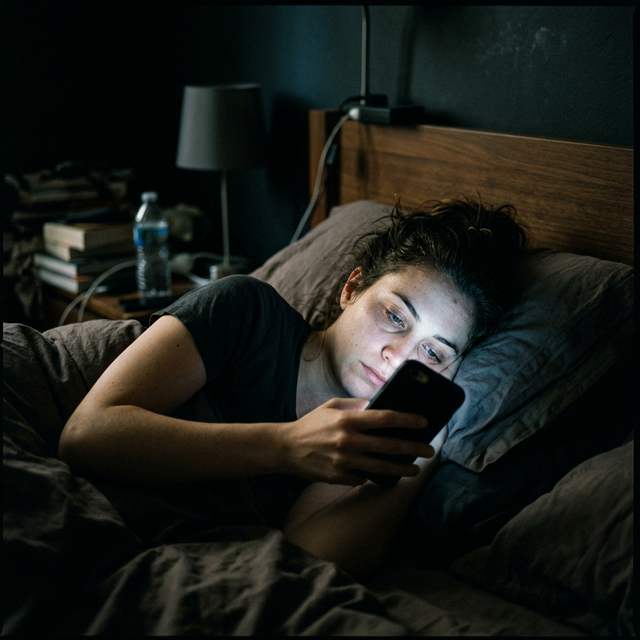
It is 11:47 PM. You told yourself you would go to bed at 11:00. But you opened Instagram "for just a second" and now you are 47 minutes deep into Reels, your brain wired with blue light and dopamine, and sleep feels further away than ever.
Sound familiar? You are not alone. Late-night scrolling is the single biggest destroyer of sleep quality for smartphone users, and the consequences go far beyond feeling groggy the next morning.
What Late-Night Scrolling Does to Your Brain
Your body has a natural clock called the circadian rhythm, and it relies heavily on light signals to know when it is time to sleep. When you stare at your phone in the dark, two things happen simultaneously, and both of them sabotage your rest.
The Blue Light Problem
Your phone screen emits blue wavelength light that directly suppresses the production of melatonin, the hormone that tells your body it is time to sleep. Research published in the Proceedings of the National Academy of Sciences found that people who used light-emitting devices before bed took longer to fall asleep, had less REM sleep, and felt sleepier the next morning even after a full eight hours in bed.
Night mode and blue light filters help, but they do not solve the problem entirely. Even with a warm screen tint, the act of engaging with stimulating content keeps your brain in an alert, active state that is incompatible with sleep onset.
The Cognitive Arousal Problem
Even if we could eliminate blue light entirely, scrolling before bed would still wreck your sleep. The content itself, funny videos, outrage-inducing posts, exciting news, creates cognitive arousal that takes time to dissipate. Your brain cannot switch from processing a stream of novel, stimulating information to peaceful sleep in seconds. It needs a wind-down period.
Studies show that people who engage with social media in the hour before bed take an average of 30 minutes longer to fall asleep than those who do not. That is 30 minutes of lying in the dark, mind racing, thinking about posts you saw, composing replies you will never send, or simply unable to quiet the mental noise.
The Compounding Effect
Here is what makes this particularly insidious: poor sleep makes you more susceptible to phone addiction the next day. When you are sleep-deprived, your prefrontal cortex (the part responsible for self-control and decision-making) operates at reduced capacity. You are more impulsive, more reactive to notifications, and less able to resist the urge to scroll.
This creates a vicious cycle. You scroll late at night. You sleep poorly. You have less willpower the next day. You scroll more. You scroll later. You sleep worse. Repeat.
How No-Go Zones Break the Cycle
ScrollOff's No-Go Zones are designed specifically for situations like this. A No-Go Zone is a scheduled period of absolute zero access to your blocked apps. No credits, no peeks, no exceptions. You set the hours, and during those hours, the apps are locked down completely.
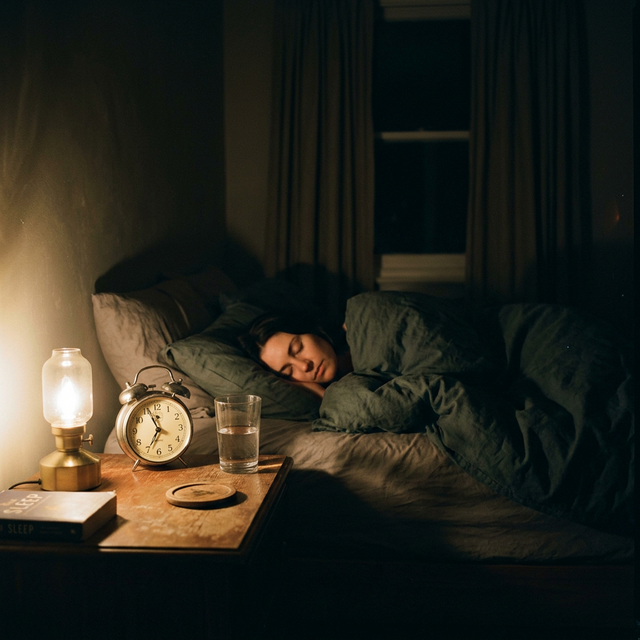
For sleep protection, the setup is simple. You create a No-Go Zone that covers the hours before your bedtime through the morning. For example, 10:00 PM to 7:00 AM.
Why This Works Better Than Willpower
The beauty of a No-Go Zone is that it removes the decision entirely. You do not have to debate with yourself at 11:30 PM about whether to open TikTok. The option simply does not exist. Your tired, depleted willpower never gets tested because there is nothing to resist.
This is a principle called precommitment, making a decision when you are thinking clearly (during the day) that constrains your future self (at night when you are tired and impulsive). It is the same reason people ask bartenders to cut them off after two drinks. You know your future self will make bad choices, so you design around it.
Setting Up Your Sleep No-Go Zone
Here is a practical guide to setting up No-Go Zones for better sleep:
- Start with your target bedtime. If you want to be asleep by 11:00 PM, set your No-Go Zone to start at 10:00 PM. You need at least an hour of screen-free wind-down time.
- Extend it through the morning. Set the end time for when you actually need to use those apps, like 7:00 AM or 8:00 AM. This prevents the "first thing I do is check my phone" habit.
- Keep phone calls and messages available. ScrollOff only blocks the apps you choose. Your phone, text messages, and alarm clock still work normally. This is not about disconnecting from the world, just from the doom scrolling.
- Prepare a wind-down alternative. The first few nights will feel strange. Have a book, a podcast, or a simple stretching routine ready for those 30 to 60 minutes before bed.
"The best sleep hack isn't a supplement, a mattress, or a temperature setting. It's keeping your phone away from your face after 10 PM."
The Free Tier Gets You Started
On ScrollOff's free tier, No-Go Zones have a minimum duration of 8 hours, which is actually perfect for sleep protection. An 8-hour No-Go Zone from 10 PM to 6 AM covers the critical window. Premium users can set zones as short as 4 hours, and Pro users can go as low as 2 hours for more flexible scheduling.
What to Expect in the First Week
The first two or three nights will be the hardest. You will reach for your phone out of habit and find the apps blocked. You might feel restless or bored. This is normal. Your brain has been conditioned to expect stimulation, and it takes a few days to adjust.
By the end of the first week, most users report falling asleep faster, waking up feeling more rested, and actually enjoying the phone-free evening time. Many discover that the 30 to 60 minutes before bed becomes the most peaceful part of their day.
Your future self will thank you. And your mornings will never be the same.