You watch a 30-second Reel about quantum physics. It has flashy graphics, quick cuts, and a confident voice explaining string theory. You scroll. Next is a Short about ancient Rome. Then one about investing. Then one about a celebrity breakup. Twenty minutes later, you feel like you learned something today.
But if someone asked you to explain any of it, you couldn't. The information dissolved the moment you swiped to the next video. What felt like learning was actually just entertainment with educational aesthetics.

The Illusion of Knowledge
Short-form content (Reels, Shorts, TikToks) is designed to feel informative. Quick facts. Surprising stats. "Here's what they don't want you to know." It triggers the same mental reward as learning something real, but without any of the depth required for actual understanding.
Psychologists call this the fluency illusion. When information is presented in a smooth, easy-to-digest format, we overestimate how much we actually learned. The slick production, confident delivery, and fast pacing make the content feel authoritative, even when it's superficial or misleading.
Research from UCLA found that students who watched fast-paced educational videos reported feeling like they understood the material better than students who read the same content. But when tested, the video watchers performed significantly worse. They confused the ease of watching with the depth of understanding.
Why 30 Seconds Can't Teach You
Real learning requires time for your brain to process, connect, and integrate new information with what you already know. This is called elaborative encoding, and it does not happen in 30 seconds.
When you watch a Short about quantum physics, you are not learning quantum physics. You are learning that quantum physics exists and maybe one oversimplified metaphor about it. That is not the same thing.
Here is what real learning requires:
- Context: Why does this matter? How does it relate to other concepts?
- Depth: Not just what, but why and how.
- Reflection: Time to think about what you just learned and how it fits into your understanding.
- Retrieval practice: Actively recalling the information later to reinforce it.
None of this happens when you are scrolling through Shorts at 3am. You are consuming content, not absorbing knowledge.
Entertainment Disguised as Education
The real problem is not that short-form content is entertaining. The problem is that it masquerades as informative while delivering almost no educational value.
A 30-second video about the Roman Empire is not teaching you history. It is giving you the dopamine hit of feeling smart without requiring any of the work that actual learning demands. You get the reward without the effort.
This creates a dangerous feedback loop. You watch "educational" Shorts and feel productive, so you keep watching. But you are not building real knowledge. You are building a habit of passive consumption that feels like self-improvement but is really just another form of scrolling.
The Retention Problem
Even if a Short contains accurate information, you will not remember it. Studies on information retention show that people forget approximately 50% of new information within an hour and up to 90% within a week unless they actively review and use it.
When you watch 50 Shorts in a sitting, you are not giving your brain any chance to consolidate that information into memory. It is cognitive overload. Your brain cannot process that volume of disconnected facts, so it discards almost all of it.
Compare this to reading a well-researched article or watching a 20-minute video essay. The slower pace gives your brain time to absorb the information. The added context helps you connect new ideas to existing knowledge. The depth makes it more likely you will remember and use what you learned.
Long-Form vs. Short-Form
This does not mean all video content is bad. Long-form videos (20+ minutes) can be genuinely educational if they provide depth, context, and time for concepts to sink in. A 45-minute documentary about climate change will teach you more than 90 Shorts about random environmental facts.
The difference is intention. Long-form content is designed to inform. Short-form content is designed to retain your attention long enough to serve you the next piece of content. Education is the aesthetic, but engagement is the goal.
Even long-form content should be consumed intentionally. Binge-watching 6 hours of video essays feels productive, but if you are not taking notes, pausing to reflect, or actively engaging with the material, you are still just passively consuming.
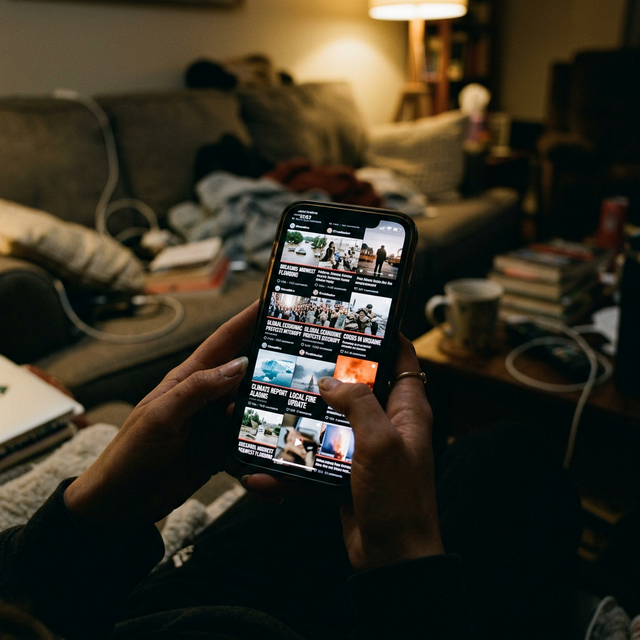
Ask Yourself: Is This Information or Entertainment?
Before you spend 30 minutes watching Shorts, ask yourself:
- Will I remember this tomorrow? If not, it is entertainment, not information.
- Can I explain this concept to someone else? If no, you did not actually learn it.
- Does this help me achieve a goal? If not, you are just filling time.
- Am I choosing to watch this, or am I scrolling on autopilot? Intention matters.
There is nothing wrong with entertainment. Watching funny videos, cool tricks, or satisfying content is fine if that is what you intend to do. The problem is when we lie to ourselves and call it learning.
What Actually Helps You Learn
If you genuinely want to learn something, short-form content is not the way. Here is what works:
- Read books and articles. Deep dives build real understanding.
- Watch long-form educational content. Documentaries, lectures, video essays with depth and context.
- Take notes. Writing forces your brain to process and organize information.
- Practice retrieval. Quiz yourself. Explain concepts out loud. Use what you learned.
- Give yourself time. Learning is not instant. It requires patience and repetition.
None of this is as fast or as easy as watching Shorts. That is the point. Real learning requires effort. If it feels effortless, you are probably not learning.
Stop Fooling Yourself
Watching "educational" Shorts is not making you smarter. It is making you feel smarter, which is worse. It gives you the sense of progress without the actual progress, so you never take the time to do the real work.
If you want to learn about history, read a history book. If you want to understand investing, take a course or read detailed analysis. If you want to know about science, watch a full lecture or read research.
Shorts are fine for entertainment. But if you find yourself watching them and thinking "I'm being productive," you are not. You are scrolling with a better excuse.
The first step to real learning is admitting that most of what you consume is not information. It is content designed to keep you watching. Once you see that clearly, you can start making better choices about how you spend your time.